Introduction
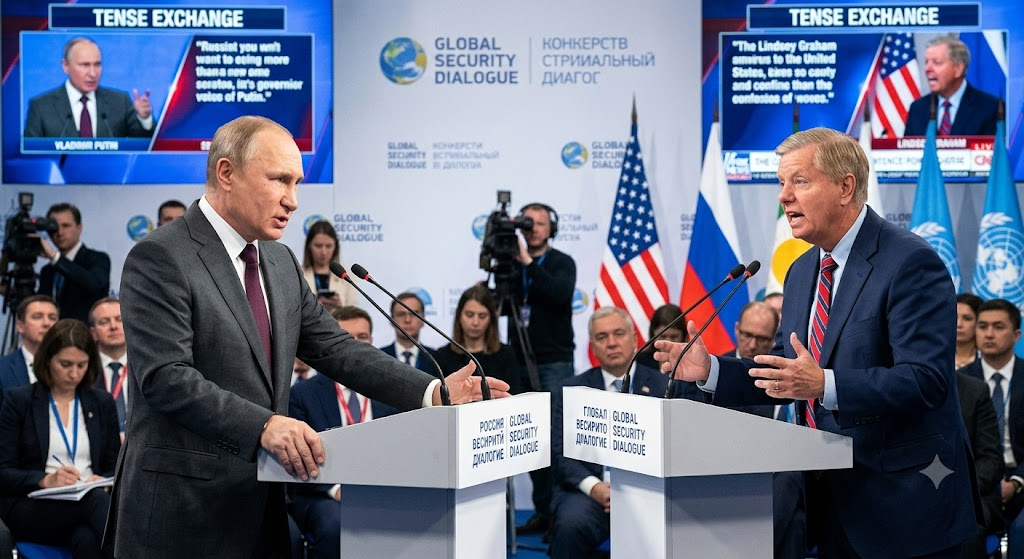
While some might consider even asking the question about whether Russia may have killed Lindsey Graham to be conspiratorial, asking the question is actually a best practice in textbook homicide investigation. It is with this philosophy that we approach the investigative premise.
“One of the most significant factors to consider in death investigation is victimology.” (p. 21)
“Equivocal death investigations are inquiries that are open to interpretation… These deaths may resemble homicides or suicides, accidents or naturals. They are open to interpretation pending further information of the facts, the victimology, and the circumstances of the event.” (p. 22)
“In keeping with the paradigm that “All death inquires should be conducted as homicide investigations until the facts prove differently,” it is absolutely imperative that investigators not allow themselves to respond to a death investigation with any preconceived notions about the case… You must keep an open mind and not allow yourself to be influenced by either the initial reports or the presentation of the crime scene.” (p. 42)
The Investigative Hypothesis
On the evening of July 11, 2026, United States Senator Lindsey Graham, a towering figure in American foreign policy and a senior member of the Republican establishment, died at the age of 711. Official statements released by his congressional office attributed his demise to a “brief and sudden illness,” while emergency dispatch audio and eyewitness accounts confirmed a rapid physiological collapse culminating in sudden cardiac arrest at his Capitol Hill residence2.
The abrupt nature of his death, transpiring less than forty-eight hours after a high-profile, aggressively anti-Kremlin diplomatic mission to Kyiv, Ukraine, presents a complex epidemiological and forensic puzzle5.
While statistical actuarial data heavily favors natural causes—specifically acute myocardial infarction or atherosclerotic cardiovascular disease, particularly given his age, high-stress occupation, and a documented family history of fatal coronary events8—the specific victimology and acute geopolitical threat environment necessitate a rigorous forensic intelligence approach.
This comprehensive report approaches the death of Senator Graham as a theoretical thought experiment and advanced case study for homicide investigators, forensic toxicologists, and counterintelligence analysts. Operating under the hypothesis that this event may represent a state-sponsored extraterritorial assassination meticulously disguised as sudden cardiovascular collapse, this analysis evaluates the evolving modus operandi of hostile state actors, specifically the Russian Federation.
By synthesizing known intelligence regarding Russian chemical and biological weapons programs, recent paradigm shifts in assassination tradecraft, toxicological vectors engineered to mimic cardiac events, and the mechanics of crime scene staging and epistemological distortion, this report outlines the precise forensic and analytical methodologies required to either confirm or definitively rule out the deployment of advanced, state-sponsored nerve agents or biotoxins.